Items
Tag
Ethnology
-
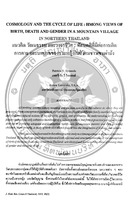 Cosmology and the Cycle of Life : Hmong Views of Birth, Death and Gender in a Mountain Village in Northern Thailand Birthing systems carry meanings unique to their cultural contexts. From conception to childbirth, the roles of family members reflect and reinforce cultural beliefs about the life cycle, gender roles, and spirituality. Understanding these interactions provides deeper insight into a culture and supports the delivery of culturally appropriate healthcare to expectant parents and their unborn children. Moreover, studying birth practices reveals the interplay between biology and culture. This ethnographic study focuses on a Hmong village in northern Thailand. Using participant observation and both informal and structured interviews, the research explores Hmong conceptions of birth within the broader framework of their beliefs about gender and the life cycle.